
In Intersection 1, Centre for Technology and Society (ZTG) at the Technische Universität of Berlin and ISOE – Institute for Social-Ecological Research jointly investigated the relationships between activities aimed at generating scientific and societal effects of transdisciplinary research. Intersection 1 continued the work carried out in Topic Line 1, “Social Effects,” by the ZTG and Topic Line 2, “Scientific Effects,” by the ISOE.
Background
After examining the societal and scientific effects of transdisciplinary research separately in the first phase of the project, the second phase focused on their interplay. The ideal transdisciplinary research process aims to use the integrated knowledge gained to achieve both societal and scientific effects. This is where the research work of Intersection 1 began. It approached the question of the relationships between scientific and societal effects with an actor-centered approach. This approach reveals the perceptions and experiences of individual researchers and practitioners who collaborate in transdisciplinary processes, as well as the effects of this research method beyond individual projects. The actor-centered approach provides a view of impacts that complements existing impact categories.
Research questions
- Research question 1: What effects does transdisciplinary research have on science and society as perceived by actors from science and practice?
- Research question 2: What factors influence the emergence of effects and their perception?
- Research question 3: What strategies are available for dealing with the demand to achieve impact in both science and society?
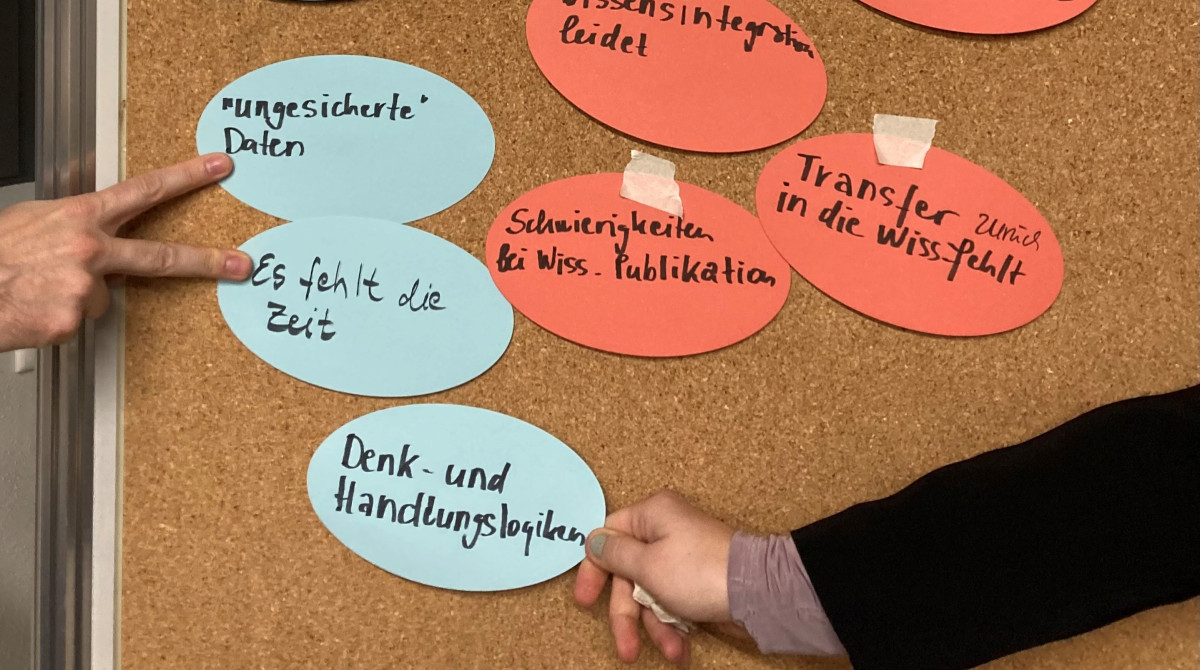
The joint research of ZTG and ISOE was designed as a qualitative second-order analysis of the empirical data collected in the first phase of tdAcademy. ZTG analyzed the workshops carried out with transdisciplinary projects to promote their societal effects. ISOE evaluated the qualitative interviews conducted with researchers. This material was supplemented by new primary data from three focus groups. After coding the empirical material, it was categorized in order to develop an exploratory understanding of constellations and factors that lead to positive or negative effects. Interim results were discussed on several occasions, and the findings from the discussions were incorporated into further content-related work.
The results of the interface are expected to be published in two articles in 2026.
If you have any questions or suggestions, please get in touch with the contact persons of topic line 1 and topic line 2.


